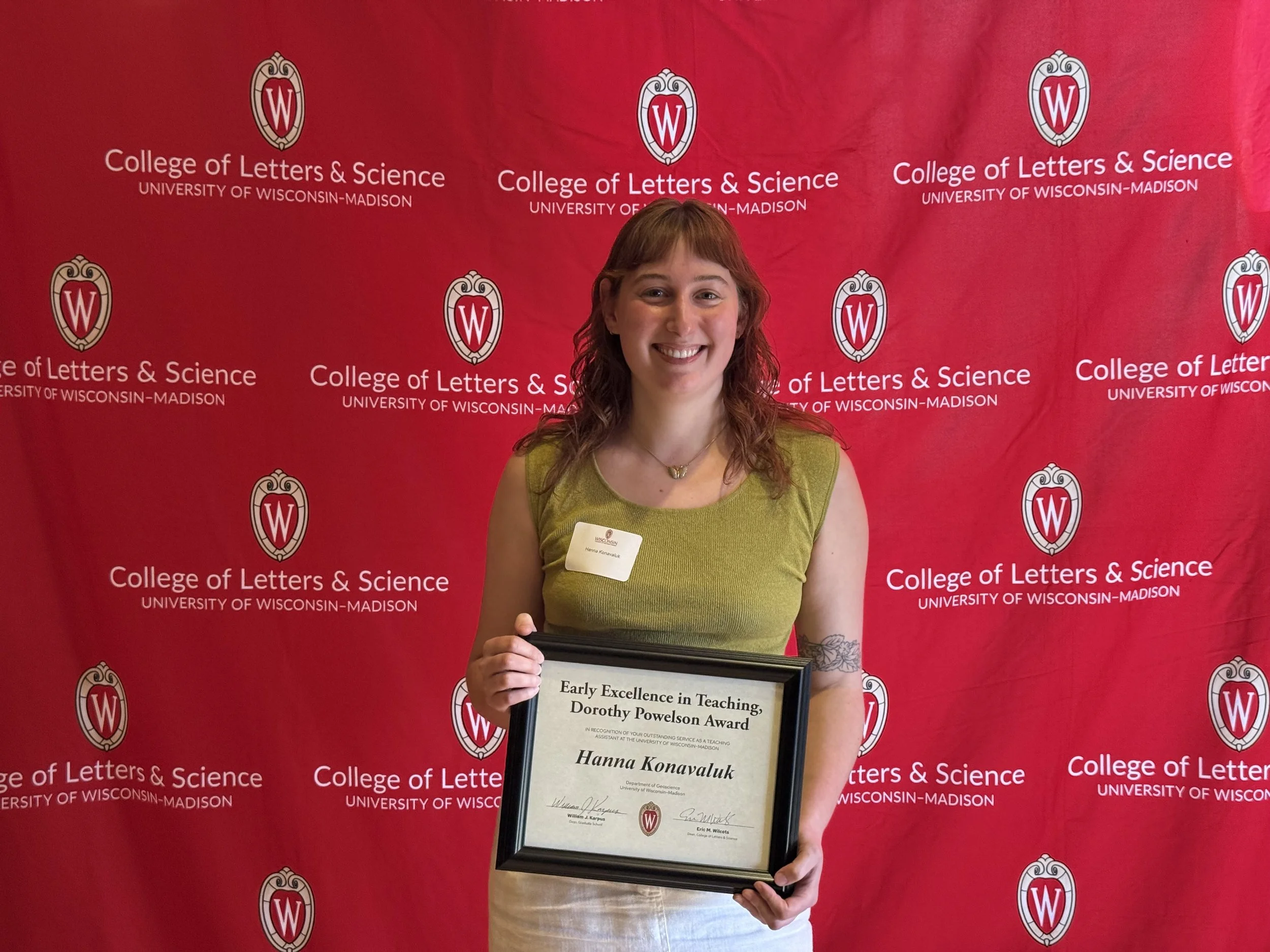
UW-Madison Early Excellence in Teaching, Dorothy Powelson Award
Recognizes outstanding performance and commitment to teaching in the natural sciences.
My Education Philosophy
My education philosophy is grounded in three principles: student-centered learning, evidence-based teaching practices, and building transferrable skills. I apply a teaching framework that focuses on student learning and community building, rather than on me as the instructor. I prioritize opportunities that allow students to take ownership learning through facilitating discovery and curiosity, rather than imparting knowledge. I view teaching as a continuous, iterative process and I am committed to continually assessing and adapting my own practices to meet my student’s evolving needs through student feedback, self-assessment, and engagement in professional learning communities. Through course design, I support the development transferrable skills to support students’ future academic and career success, such as responsible AI literacy, critical reasoning, and assessment of assumptions and bias.
Teaching Appointments
University of Wisconsin-Madison
Department of Geosciences
2024 - 2025
Graduate Teaching Assistant
-
Assisted in the development of courses, including designing and revising lesson plans, developing laboratory activities (both online and in-person), creating digital course materials, and assisting with exam writing.
Led weekly laboratory sections, including developing and delivering oral lectures and guiding students through lab and discussion activities.
Used Canvas extensively to design online assignments, grade assignments, communicate with students, and manage course content.
Provided one-on-one academic support during weekly office hours, study sessions, as well as via email and Canvas, to reinforce course concepts and promote student success.
Maintained accurate and organized student records, including grades, assignment submission, and student performance.
Coordinated and communicated with instructional team to ensure course and student success, organized program planning, and standardized assessment.
Prepared, reviewed, and updated course materials regularly in Canvas.
Timely communication with students via email, Canvas messaging, and Canvas announcements to set expectations, reiterate deadlines, and resolve issues.
Designed and implemented course policies on use of artificial intelligence (AI), along with its intentional integration into laboratory activities to build AI literacy through responsible engagement with AI tools and reflection on its limitations and impacts on science.
Geoscience Education Specialist
Glacier National Park
2024 - 2025
-
Developed interactive lesson plans and activities, integrating the principles of sedimentary, igneous, metamorphic, and glacial geology.
Integrated local geology and ecosystems into lessons to support place-based learning and to promote the integration of course material with students’ everyday life and natural environment.
Collaborated with Glacier National Park Education Technicians to refine and implement geoscience education programs.
Formal Education
Certificate in Higher Education Teaching & Learning
August 2025
University of Wisconsin-Madison, Delta Program
-
Teaching in Science & Engineering
Effective Teaching in Diverse Classrooms
Expeditions in Evidence-based Teaching and Learning
Justice Focused Geoscience
Capstone in Teaching
Staying Human with AI Teaching.
I intentionally incorporate the principles of student-centered learning; evidence-based teaching practices; place-based learning; and building transferable skills both at the course design level and when creating individual assignments.
My Education Philosophy
Student-Centered Learning
I apply a teaching framework that focuses on student learning and community building, rather than me as the instructor. What this looks like in practice is prioritizing opportunities that allow students to take ownership their own learning; facilitating learning, rather than imparting knowledge; and setting clear expectations
-
For example, rather than simply telling my students that high-energy marine environments create coarse-grained rocks and low-energy marine environment create fine-grained rocks, my students will complete an assignment where they describe rock samples that were formed by different environments and make conclusions about the correlation between grain size, texture, composition, and the environment. This framework not only facilitates investment in their own learning experience, but it helps them retain information better and develop critical analysis skills.
I seek to develop a sense of community in the classroom, where collaboration and mutual respect are foundational. I foster this community through group discussions, peer feedback, and projects that encourage students to work together, share ideas, and learn from each other. As we engage in this collaborative process, I aim to promote not just intellectual development, but also social-emotional growth that will serve students both in and outside the classroom.
My teaching philosophy is underpinned by the principles of accessibility and inclusivity. I believe in designing learning experiences that are flexible, accommodating diverse learning needs, and offering multiple pathways for students to succeed. This approach ensures that all students—regardless of their background, abilities, or prior experiences—can engage meaningfully with the content. I am committed to creating a classroom environment where each student feels supported and valued, and where their unique perspectives can enrich the learning process.
Transferrable Skills
I emphasize problem-based learning and real-world application in the classroom. Authentic learning experiences—those that mirror the complexities students will encounter in the workforce—are essential in helping students build practical, transferable skills. Every time a student enters my classroom, I see it as a valuable opportunity to engage them deeply, challenge their perceptions of science, and foster their growth as critical thinkers.
-
For students who don’t want to pursue a STEM degree, it’s not important to me that they remember the types of plate tectonic boundaries years later. What matters more is that they leave the course with the ability to question statistics, analyze data relationships, and think critically about the information they encounter. This kind of intellectual development cannot be achieved through rote memorization, but rather through active, critical engagement with science as a dynamic, problem-solving process.
To support this, I use scenario-based learning, such as role-playing stakeholders in climate action plans or working with AI tools. These activities allow students to confront real-world challenges while building key skills like communication, problem-solving, and ethical reasoning—skills that are relevant in any professional field.
AI in Geoscience Classrooms
I designed course policies about AI and incorporated engagement with AI tools in Introductory Geology labsso that students can become confident, ethical users of these tools. These activities allow students to confront real-world challenges while building key skills like communication, problem-solving, and ethical reasoning. The integration of AI tools in my teaching is intentional and strategic. I design scaffolded assignments that allow students to explore and reflect on the capabilities, limitations, and impact of these technologies.
Rather than banning the use of AI tools, I see an opportunity for students to develop critical thinking skills while also building an understanding of the strengths and limitations of these technologies. To support this, I design all assignments that incorporate AI to include a reflective component in which students evaluate how the technology was used, assess the usefulness of its application, and consider ethical implications. I view building AI literacy as an essential transferable skill that supports their development as adaptable, informed thinkers who can apply what they have learned well beyond the classroom.
-
Early in the semester, students engaged with AI tools to practice describing rocks by entering their own observations into a large language model (LLM), such as ChatGPT, as if explaining the specimen to a blindfolded friend. This exercise reinforces the importance of precise, detailed observation in geoscience. As their skills grow, students begin to critique and correct AI outputs, developing both geologic knowledge and digital literacy. Throughout the semester, I facilitated their comfort with these tools, while also developing a critical lens for their limitations and negative societal and environmental impacts.
I have designed a final lab assignment where I ask students to role-play as an expert geologist investigating a rare fossil-rich rock. In this assignment, students are able to answer questions and make decisions at a higher level because students use AI tools to gather reliable sources, write code that allows them to analyze large datasets, and fill in knowledge gaps. This assignment models how students will be asked to engage with artificial intelligence in the workforce.
Place-Based Learning
Teaching in the fields of environmental science and geology offers a unique opportunity: students can walk out of the classroom and experience the principles we teach them firsthand. Whether they live in an urban or rural setting, they are surrounded by real-world examples of the course content in the air that they breathe and the lakes they swim in here in Madison, WI.
-
The hands-on, tangible engagement that is possible with geoscience is truly special. Students can hold rocks that have been buried deep underground or trace the outline of their oldest fossil ancestors. I facilitate learning experiences that emphasize the relevance of what they are learning in the world around them, while also equipping them with the skills to synthesize complex information and understand the broader context of data they encounter.
My philosophy is intentionally fluid.
I regularly implement student and peer feedback, self-assessment, and engagement in professional learning communities to evolve with the changing needs of my students.
I thoughtfully refine my teaching strategies to better support the success of my students.
-
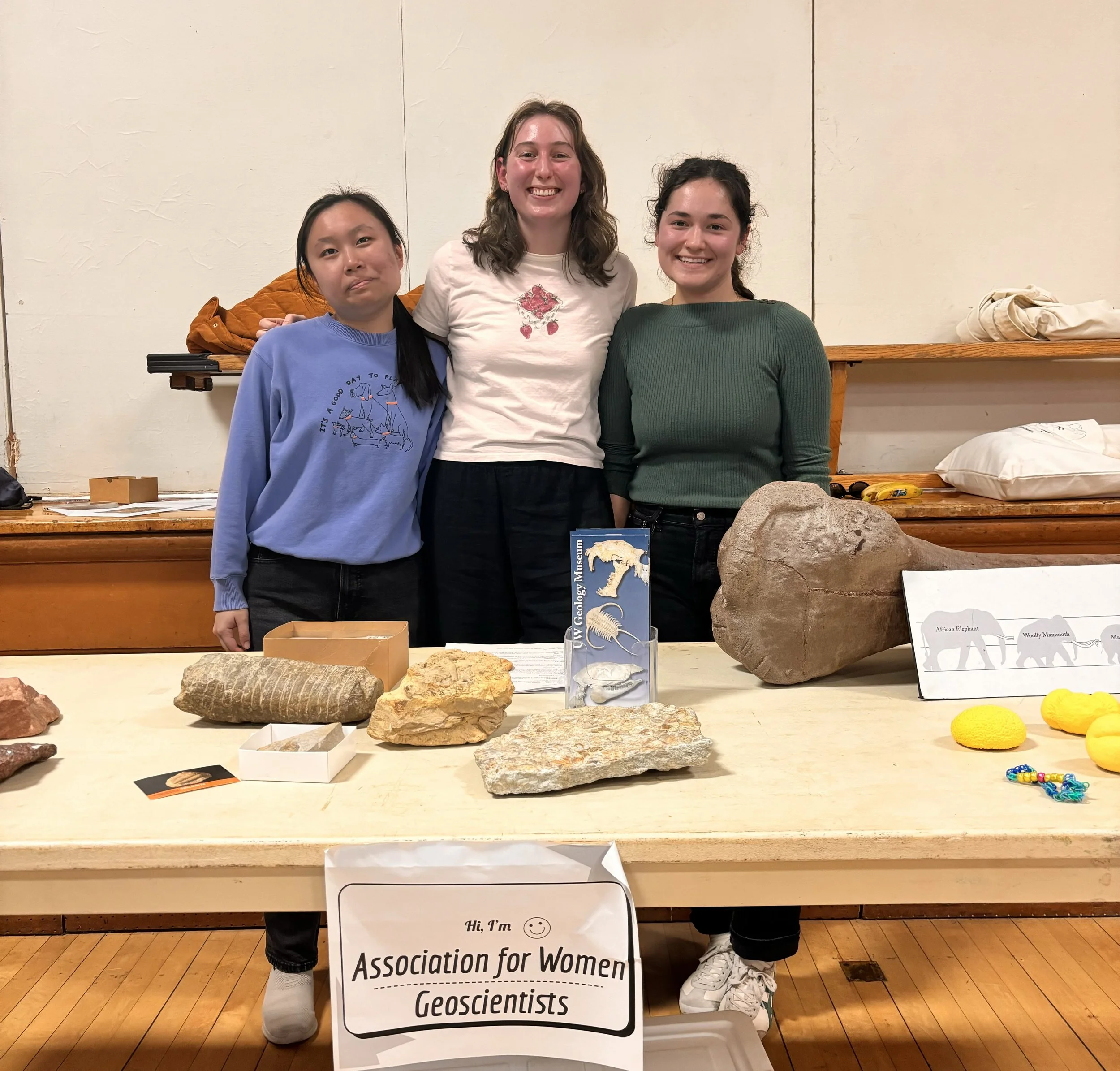
Shorewood Hills Elementary
Geoscience display at Science Night
-
UW-Madison Early Excellence in Teaching, Dorothy Powelson Award
Recognizes outstanding performance and commitment to teaching in the natural sciences.
-
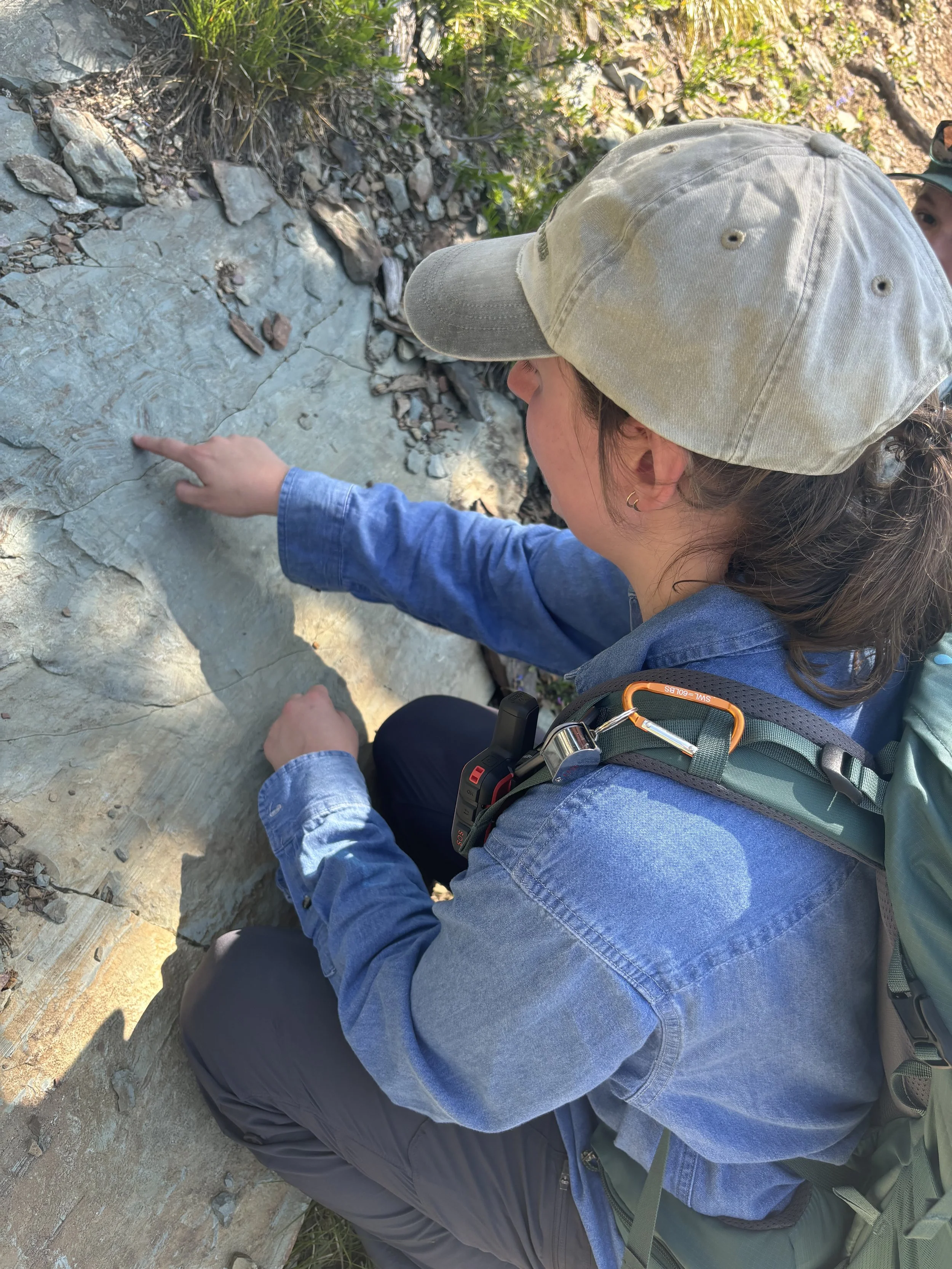
Glacier National Park
Mudchips in the Belt Supergroup